

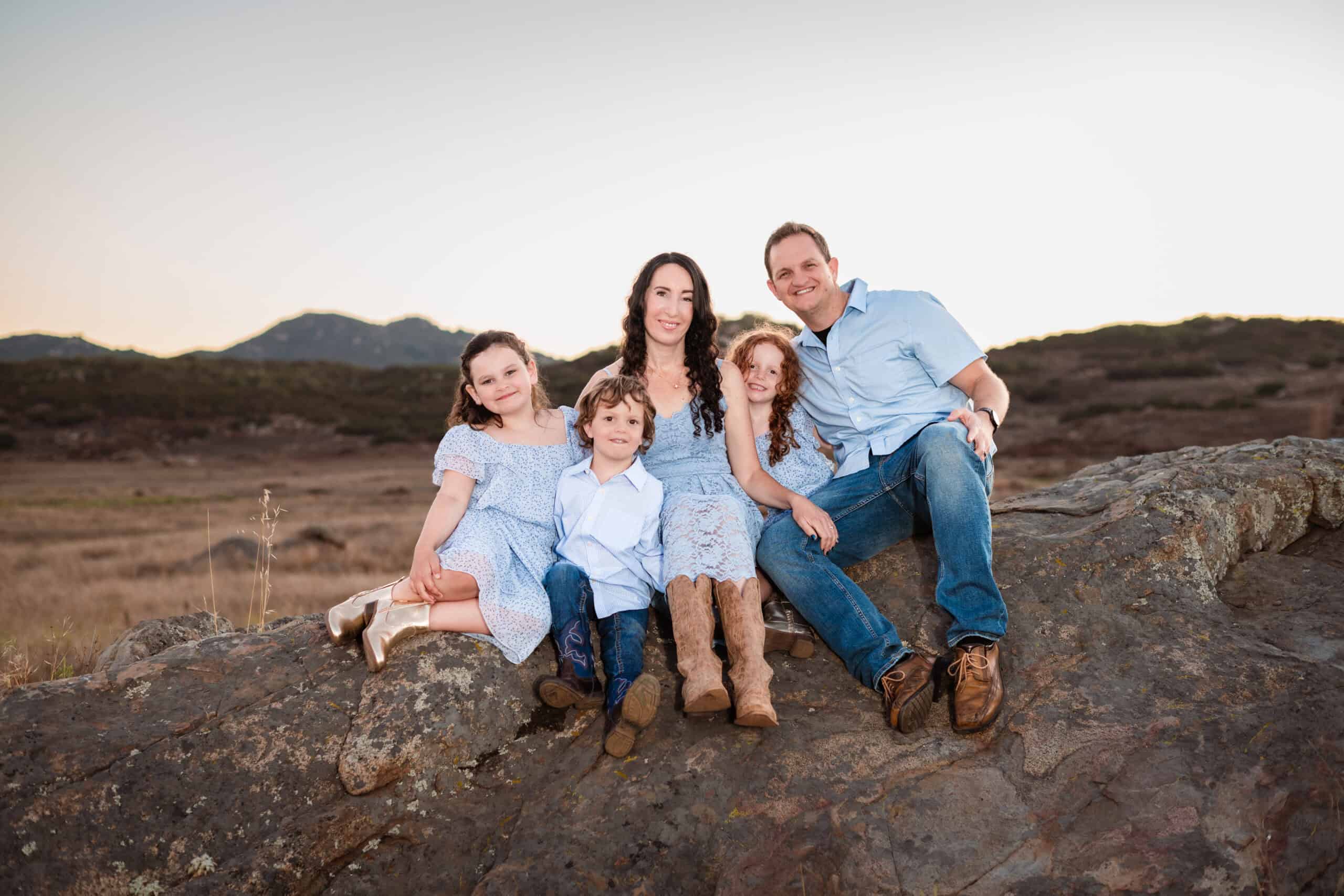
There is much more to Philip’s story than we shared in our eBlast. We invite you to get to know Pastor Philip and his family more in this extended bio version.
Philip Cross loves Scripture and loves to preach it, and he has a particular heart for people who still have honest questions about faith. He has been in pastoral ministry for more than a decade, serving as a youth pastor, associate pastor, church planter, lead pastor, and most recently executive pastor, and he has also served as an elder. He has also spent eight years in senior leadership with Chick-fil-A, where he led large teams and learned much of what he knows about how healthy organizations work. Pastor Philip is executing a succession plan to ensure he can serve Canyon Springs full-time.
He and his wife, Nicole, have been married for fifteen years and have three children: Lauralee, Harmony, and Lewis. Philip’s path into ministry hasn’t been straight, but he can look back and see how each part prepared him for the next.
When he was fourteen or fifteen, Philip read the parable of the talents in Matthew 25. One line stuck with him: the master’s words to the servant who had put what he was given to work: “Well done, good and faithful servant.” He decided then that whatever else happened in his life, he wanted to hear those words at the end of it.
That has served as a personal mission statement ever since. Philip tries to treat his time, abilities, opportunities, relationships, and resources as things held in trust, and many of his biggest decisions trace back to that idea.
A Faith That Had to Survive Questions
Philip grew up in a Christian home, and college tested that faith harder than he expected. As a Religious Studies major at San Diego State University, he studied world religions, philosophy, and the relationship between religion and science. He also started reading prominent atheist writers, and before long he was seriously questioning the Christianity he had been raised in.
He wanted to know whether any of it was true. Is there good reason to believe God exists? Can the Bible be trusted? Are the Gospels reliable history? Was Jesus who Christians say he was? At one low point he prayed a short, honest prayer: “God, if you don’t do something, you’re going to lose me.”
Not long after that, he picked up C. S. Lewis. Lewis didn’t settle Philip’s questions, but he showed him something he hadn’t really seen before: serious, thoughtful people could be Christians with their eyes open. That discovery started a long stretch of reading and wrestling. Philip worked his way through apologetics (“defending the faith”), philosophy of religion, theology, and Scripture, and over time his faith was rebuilt. The hard questions were still there. He had found that Christianity could hold up under them.
That season left him with a lasting burden for what he calls the “modern-day Thomas,” someone drawn to Jesus but with real questions, and who wants to know whether Christianity is true before building a life on it. Philip wants the church to be a place where people like that can ask their questions openly, take Jesus seriously, and find that faith and careful thinking can live together.
From the Classroom to the Church
Those questions led him to graduate school. He finished at San Diego State at twenty and earned a Master of Arts in Biblical Theology from Fuller Theological Seminary two years later. He later completed a second Master of Arts in Philosophy at California State University, Long Beach, where his research centered on philosophy of religion and the cosmological argument for God’s existence.
For a while Philip assumed he would end up teaching philosophy of religion at a university. He loved the big questions and could have happily spent a career on them. Over time, though, he cared less about whether Christianity could be defended in the abstract and more about what it meant for actual people. If Jesus really lived, died, and rose again, that says something about identity, purpose, relationships, and how a person spends a life.
He became convinced that few things matter more than helping people see who Jesus is, understand what he taught, and rebuild their lives around him. That conviction pulled him toward pastoral ministry.
Learning to Lead, Early
Philip has always moved quickly. He finished high school at fifteen, college at twenty, his first master’s degree at twenty-two, and his second a few years after that. He stepped into ministry young as well, first as a youth pastor and then as an associate pastor, doing a mix of preaching and teaching, small groups, pastoral care, and discipleship.
In 2015, he planted Redemption Church in Moreno Valley. He gathered a launch team, raised support, preached every week, started discipleship ministries, developed leaders, and got to know the community. People came to faith and were baptized, and the church served through foster-care support, homeless outreach, suicide-prevention work, and partnerships with local schools. Redemption eventually merged with another church plant in the area. The merger gave the congregation a stable home and opened the door for Philip’s next step in vocational ministry.
Those years humbled him, too. He had vision, energy, theological training, and a real desire to reach people, and he learned that none of it is enough on its own. Leading a church well also takes patience, maturity, the ability to develop other leaders, and the practical wisdom to build something that lasts. Philip is grateful for what God did through Redemption Church, and just as grateful for what God did in him there.
An Unexpected Leadership School
After Redemption, Philip began what turned into eight years of leadership with Chick-fil-A. His reasons were practical at first. Money had been one of the hardest parts of church planting, and becoming a Chick-fil-A Operator looked like a way to support bi-vocational ministry, something like Paul’s tentmaking.
What he got was a leadership education. He learned to lead teams of 60 to 100 people, develop managers and directors, oversee operations and finances, build systems and accountability, shape a culture, plan strategically, and turn ideas into plans people could carry out. Many of the gaps he had felt as a young church planter started to close.
Those years also sharpened how he thinks about leading a church. A church is a spiritual community, and no system can produce spiritual life. Still, clear expectations, good communication, sensible structures, and shared accountability make room for ministry to flourish and help people use their gifts.
Philip sees a familiar pattern in Scripture here. Moses tended sheep for years before God sent him to lead Israel, and David learned courage and responsibility in the fields long before he was king. God often uses ordinary work to prepare people for what comes next, and Philip believes that’s what those years were for him.
The restaurant was also a place of ministry in its own right. Working alongside people from many backgrounds, many of whom didn’t share his faith, taught him how to live as a Christian in an ordinary workplace: leading with integrity, building real friendships, and talking about Jesus naturally.
He stayed involved in the local church throughout, most recently as Executive Pastor at Pomerado Christian Church. There he has helped lead staff and elders, clarify vision and strategy, strengthen discipleship pathways, and bring the church into closer alignment around its mission.
Called Back to Full-Time Ministry
By late 2024, Philip had focused on his marketplace career for several years, and becoming a Chick-fil-A Operator was a real possibility. Then, through prayer, Scripture, sermons, and a few conversations, he kept coming back to the same question: had the marketplace been the destination, or the preparation?
One passage kept coming up. In Luke 5, Jesus tells fishermen who had caught nothing all night to let down their nets once more, and then he redirects their lives: “From now on you will fish for people.” That passage, along with several confirmations they didn’t expect, became central to what Philip and Nicole came to recognize as God’s renewed call to full-time vocational ministry.
They took their time. For about six months they prayed, talked, and thought through what it would mean for their family. Philip doesn’t regard the Chick-fil-A years as a detour. He sees them as part of how God prepared him, and he returns to full-time ministry with the same love for Scripture he had as a young pastor.
What Matters Most to Him in Ministry
- Scripture and preaching. Philip loves to preach because he loves the Bible. Years of reading, studying, and teaching it have shaped how he understands God, himself, other people, and the world, and he considers preaching one of his primary gifts. He aims for preaching that is both exegetical and practical, helping people understand what a passage says, why it matters, and how it should change the way they live.
- Discipleship and spiritual formation. Philip sees making disciples as the church’s central work. A church can’t manufacture transformation, but it can help people build their lives around the practices God has long used to form his people: Scripture, prayer, worship, community, service, confession, and generosity. The hope is for people who increasingly look like Jesus, and not only people who know more about him.
- The next generation. Philip is passionate about reaching children, teenagers, college students, young adults, and young families. He believes every church needs to keep asking whether it is passing the gospel on to the people coming behind it. A healthy church honors and cares for every generation, and it is willing to make sacrifices to reach those not yet in the room.
- Healthy leadership. Philip tends to think about the future: where a church is headed, what’s in the way, and what kind of team and structure will help it get there. He’s convinced that good organization should serve ministry, not replace it. He wants to help build a church that is spiritually alive and organizationally healthy, where leaders are developed, people understand the mission, ministries work together, and structures free people to serve.
C. S. Lewis remains foundational for Philip. William Lane Craig shaped his work in apologetics and philosophy, and Timothy Keller has influenced much of how he thinks about the gospel, preaching, and speaking to a skeptical culture. N. T. Wright, J. I. Packer, Charles Spurgeon, Francis Chan, and Richard Foster are well represented on his shelves too.
If personality assessments are your thing, Philip is an Enneagram 3 and an INTJ. His top StrengthsFinder themes are Learner, Achiever, Futuristic, Ideation, and Relator, and his Working Genius is Wonder and Invention. In plain terms, he’s driven and curious, and he’s happiest asking big questions and imagining what could be.
Nicole and the Family
Philip and Nicole were both born in Poway. Nicole spent part of her early childhood in Ramona and many years in the Temecula area. She taught English for several years and later worked as an educational facilitator with charter schools. More recently, she has worked part-time alongside Philip at the restaurant while focusing mainly on raising their kids, and she is now praying through what her own next season of work will look like.
Philip and Nicole have always seen ministry as a shared calling. Nicole loves to sing and has served on worship teams, but her deepest passion is discipling women. She is a gifted teacher and has led women’s groups well. She’s drawn more to relationships than to programs, and she loves settings where women can be honest with one another, study Scripture together, and grow in their lives with Jesus.
Lauralee, Harmony, and Lewis keep life full, and the family is always looking for the next thing to do together. Philip loves to cook, especially smoked BBQ, pizza, and cinnamon rolls, and he is a lifelong Lord of the Rings nerd. And yes, Lewis is named after C. S. Lewis.
The line that caught Philip’s attention as a teenager still guides him: “Well done, good and faithful servant.” His own story has taught him that faithfulness doesn’t mean getting everything right. It means taking seriously what God has put in your hands and helping others do the same. That is the kind of pastor he hopes to be.
Philip, Nicole, and the kids look forward to meeting you soon.





Leave A Comment